Australia’s sliding doors moment on AI
Australia’s AI future is being shaped now by the choices governments, businesses and institutions make about what they build, what they buy and who they trust. At stake is more than technology adoption. It is whether Australia becomes a builder and exporter of trusted intelligence, or a long term renter of AI capability created somewhere else.
By Paul Chan, Decidr Founder and Co-CEO
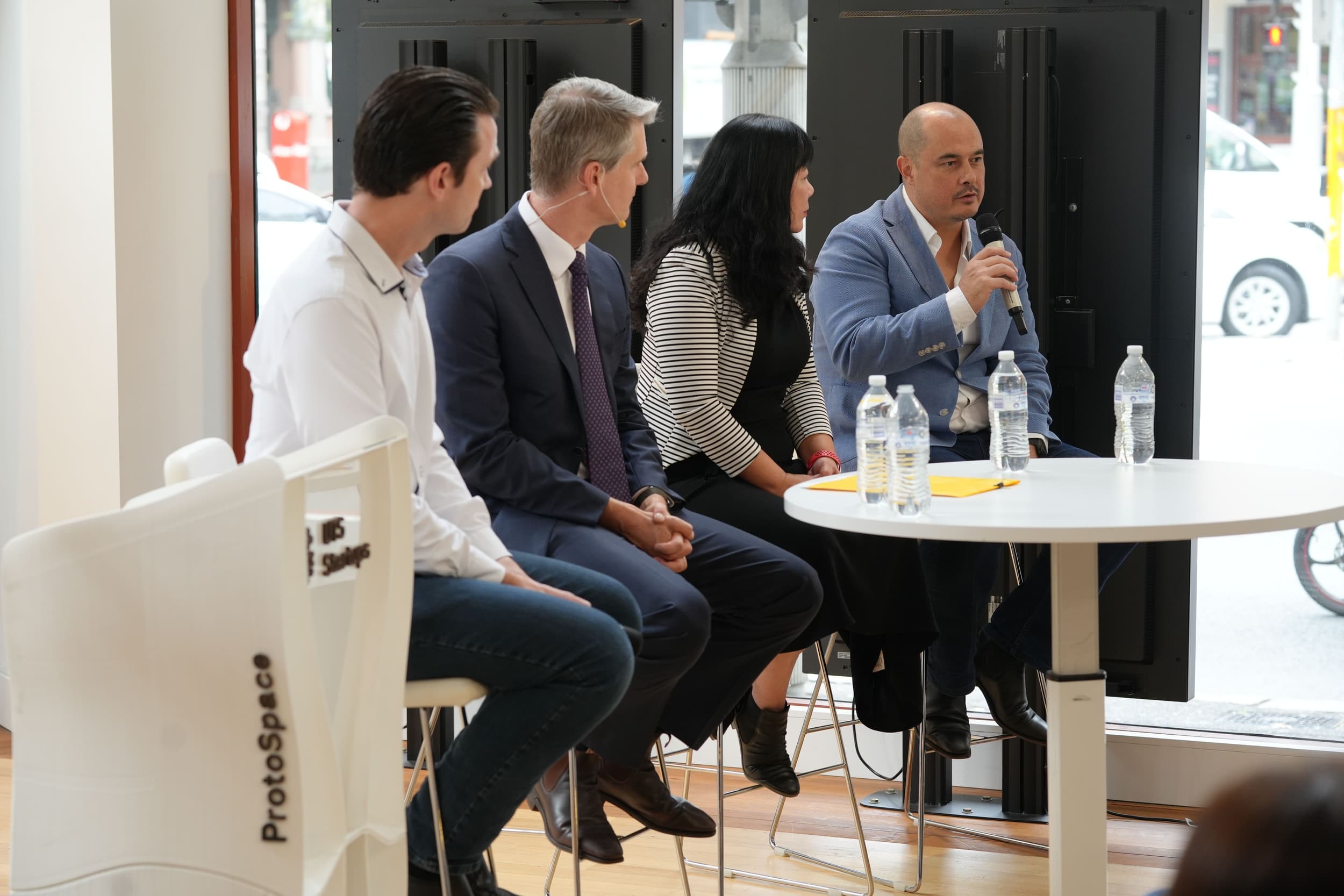
Last week, I had the honour of presenting alongside the Hon Dr Andrew Charlton at UTS Startups.
We covered a lot of ground, but the biggest question was this:
Will Australia build sovereign AI capability of its own, or become a permanent renter of intelligence from abroad?
Andrew described this as Australia’s “sliding doors” moment. In one future, we back Australian capability. We build a domestic AI industry. We keep our data, expertise and economic value onshore. We become a country that exports AI solutions to the world.
In the other future, we adopt AI enthusiastically, but rely on foreign AI systems. We rent intelligence from overseas. We send long term value, IP and capability offshore.
I think that framing is exactly right.
Australia’s AI future is not abstract. It’s being shaped now, through the choices governments, businesses and institutions make every day.
Procurement is not just a technical decision
One of the most important points Andrew made was that procurement decisions matter.
Every time an organisation chooses an AI platform, it’s making more than a product decision. It’s deciding where capability is built. It’s deciding where value accrues. It’s deciding whether Australian AI companies get the chance to grow, compete and export.
That doesn’t mean choosing Australian technology regardless of quality.
But when the Australian option is fit for purpose, it should be given serious consideration. It should be on the shortlist. It should be assessed on merit, with an understanding that these decisions compound across the economy.
One procurement decision may seem small. Thousands of those decisions, repeated across businesses and government, will help determine whether Australia has a serious AI industry in ten years’ time.
Intelligence should serve our goals
For me, the deeper question is what we want intelligence to do.
AI is not just another technology layer. It’s a new way of making decisions, coordinating work and turning goals into action.
That means intelligence needs to be aligned to the people and organisations it serves.
Every individual, business and institution has its own goals, preferences, obligations and values. AI should not flatten those differences. It should help people define what they’re trying to achieve, understand the path to getting there and make better decisions along the way.
This is why sovereign capability matters.
It’s not only about where the technology is built. It is about whether the intelligence we use reflects our priorities, our standards and our long term interests.
Australia’s advantage is trust
I believe Australia has a unique opportunity in this next era of AI.
We are a trusted middle power. We have strong institutions, technical talent and a reputation for reliability. In a world where trust in governments, platforms and institutions is under pressure, that matters.
The next great export may not just be energy, resources or education.
It may be trusted intelligence.
As AI becomes more powerful, organisations will ask harder questions. Who owns the data? Where is it stored? How are decisions made? Can the system be governed? Can it be trusted? Does it serve the goals of the organisation using it?
Australia is well positioned to answer those questions.
We can build AI that’s secure, transparent, practical and aligned with human goals. We can build systems that help organisations make better decisions without handing over strategic control.
That is a real opportunity.
AI will change who gets to build
I'm also passionate about expanding the way we think about entrepreneurship.
For a long time, building a business has required a particular kind of grind. The hustle, the administration, the operations, the systems, the paperwork, the coordination. All of that work matters, but it can also get in the way of the best people doing their best work.
AI has the potential to lower those barriers.
Over the next 12 months and beyond, I think we will see more people with exceptional expertise, ideas and craft become able to bring their work to the world without having to become traditional entrepreneurs in the old sense.
They may not think of themselves as founders. They may not want to run companies. They may simply be the best at what they do.
But with new operating systems and artificial intelligence supporting them, more of those people will be able to build, scale and be discovered on the strength of their capability.
That matters for Australia.
If we build the right AI infrastructure here, we can unlock more of the talent that already exists across this country. Not just in startups, but in small businesses, professional services, research, education, healthcare, creative industries and communities.
Sovereign AI is not only about national competitiveness. It is about giving more Australians the tools to turn expertise into value, without being held back by the old barriers to entry.
We're moving from digital to digital
The speed of this shift is different from previous technology waves.
When the internet arrived, we moved from analogue to digital. We stopped going to the bank and started using an app. We moved forms, transactions and communication online.
AI is different. We are now moving from digital to digital.
That means change will happen much faster. The systems, data and workflows already exist in digital form. AI can act on them, connect them and transform them at speed.
The question is not whether Australian organisations will adopt AI. They will.
The question is whether we will build and own meaningful parts of that capability, or rent it from elsewhere.
Choosing the door that builds capability
Australia’s AI future is not predetermined.
We can choose to build. We can choose to back local capability where it is fit for purpose. We can choose to treat AI as a nation building opportunity, not just another software category.
Or we can default to overseas platforms and spend the next generation renting intelligence from abroad.
I believe Australia can build serious AI capability here.
We have the talent. We have the trust. We have the ambition. And we have an opportunity to become a global leader in trusted intelligence.
The sliding doors are open now.
The question is whether we walk through the one that builds capability, value and trust here in Australia.